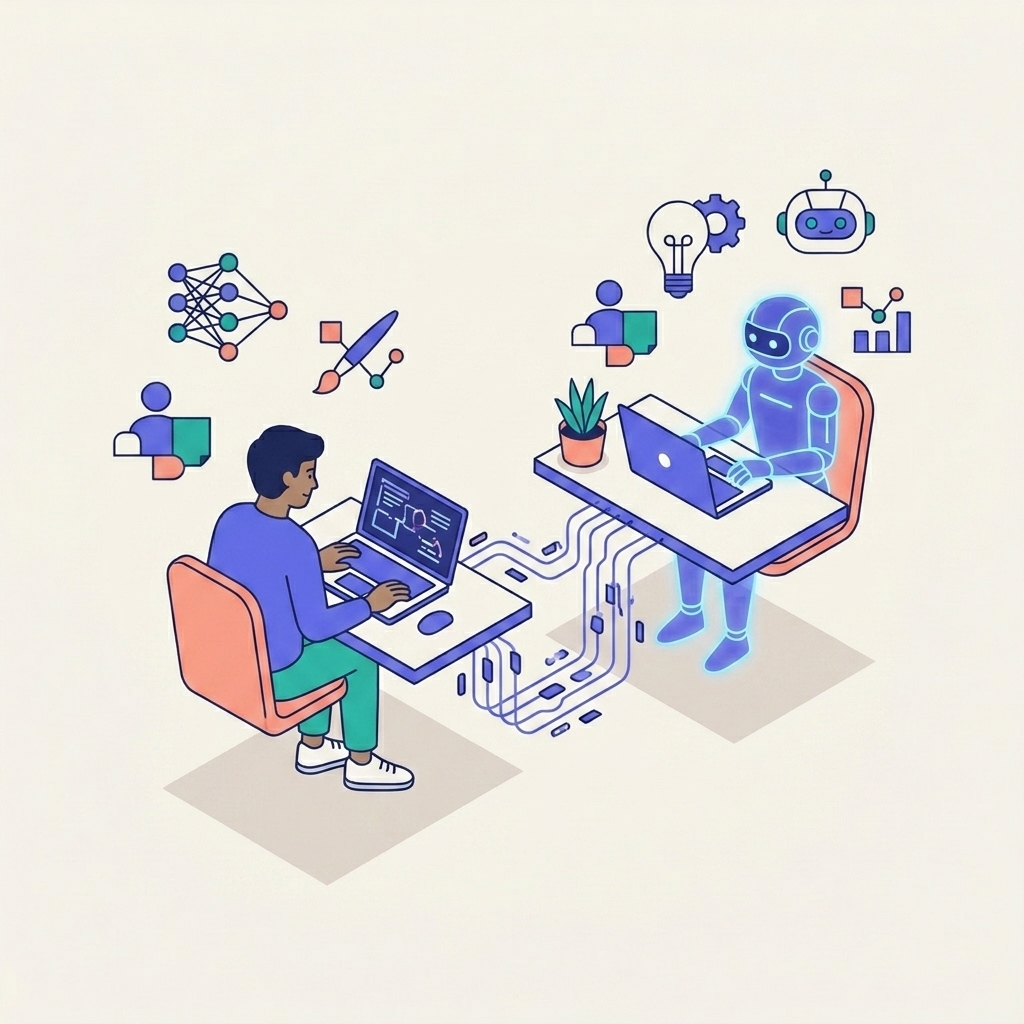
People often ask what it actually looks like to run an agentic workflow. It’s easy to talk about "orchestration" and "digital sovereignty," but the reality is much more tactical.
As a consultant, I’ve moved away from viewing AI as a simple chatbot and started treating it as a reliable, asynchronous co-founder. Because of my strict "No API, No Buy" rule, my entire tech stack is seamlessly connected to my local agent, allowing it to work continuously in the background.
Here is what a typical 24 hours looks like when you adopt the "Human on the Balcony" methodology.
07:00 AM: The Morning Briefing
I wake up, but my local agent has already been working. While I slept, it processed overnight emails, categorized them by urgency, and drafted preliminary responses. When I open my Notion dashboard, I don't see an inbox of 50 emails. I see a summarized list of three items that require my high-level strategic input. The noise has been filtered out entirely on my local machine.
10:00 AM: Deep Work & Orchestration
I spend my morning focusing on high-value strategy for a client. Meanwhile, I trigger a background workflow for a different project. I give the agent a high-level goal: "Analyze the competitor dataset we downloaded yesterday and extract key pricing disparities." I don't prompt it step-by-step. I give it the objective, and it utilizes its local tools (Python scripts, data parsing) to execute the task while I focus on creative work.
02:00 PM: The Handoff
I finish my strategy document. In the past, I would spend another hour formatting it, checking it against the client's brand guidelines, and drafting the delivery email. Now, I toss the raw markdown file into a specific local folder. My agent's filesystem watcher detects the file, runs it through a local LLM to format it into a polished PDF, drafts the email using my cloned brand voice, and queues it in my outbox for final approval.
05:00 PM: Administrative Cleanup
Invoicing and data entry are handled without my intervention. The agent cross-references my calendar with my completed tasks, generates the invoices via my billing software's API, and updates my financial tracker.
The Shift in Mindset
Working with an AI co-founder requires letting go of the execution. You have to trust the systems you build. By keeping the intelligence local, I never worry about data leaks or subscription limits. I simply stand on the balcony, survey the work, and make the decisions that only a human can make.