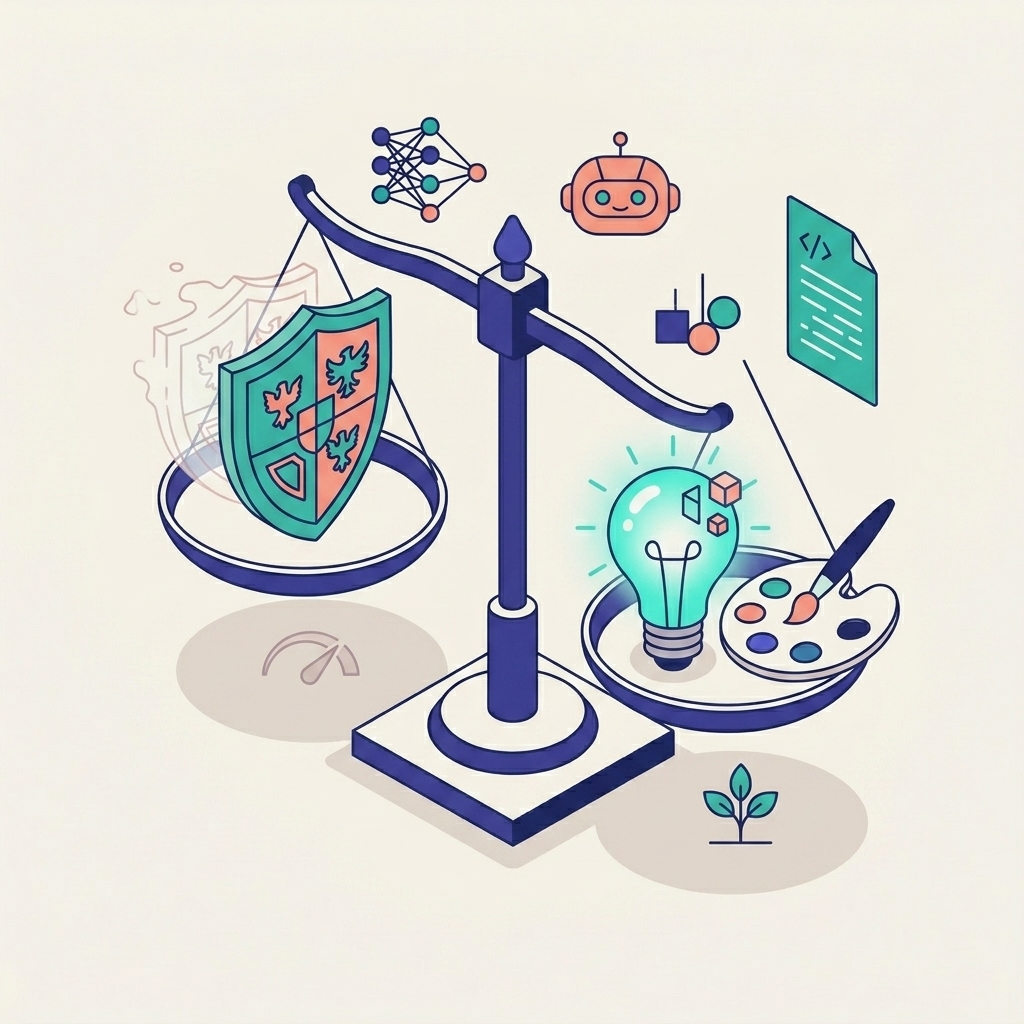
In a significant divergence from industry trends, Anthropic recently made headlines by being explicitly banned from Department of Defense (DoD) federal contracts. Why? Because they outright refused to allow their flagship model, Claude Opus 4.7, to be used for surveillance or autonomous weapons systems.
This stands in stark contrast to competitors like OpenAI and Google, who have recently signed lucrative defense contracts.
While this might seem like distant geopolitical news, for those of us working in creative consulting, education, and social impact, this decision fundamentally changes how we choose our AI partners.
The Ethical Infrastructure of AI
When you build a curriculum for young people (as we do at Become Inspired) or consult for brands on their digital strategy, the tools you use are an extension of your own ethics.
AI models are not neutral software. They carry the biases, safety guardrails, and corporate priorities of their creators. When Anthropic draws a hard line against military applications, they are signaling a commitment to "Constitutional AI"—models trained to be helpful, harmless, and honest above all else.
Why This Matters for Educators
In education, safety and harmlessness are non-negotiable. When bringing AI into a classroom or using it to design youth facilitation programs, we need models that prioritize de-escalation, refuse harmful requests, and maintain a highly ethical baseline.
Anthropic’s willingness to walk away from massive government contracts to maintain these guardrails proves their commitment isn't just marketing copy. It makes Claude the safest and most reliable model to integrate into educational workflows.
Why This Matters for Creatives
For graphic designers, writers, and creative consultants, brand safety is paramount. If you are using an AI to generate copy, brainstorm campaigns, or analyze cultural trends, you want a model that understands nuance and avoids generating toxic or polarized content.
Claude 4.7 has consistently proven to be the most "human" and nuanced writer among the major LLMs. This is a direct result of the same ethical training that led to their DoD refusal. A model trained to be deeply considerate of human values makes for a much better creative collaborator.
Choosing Your AI Partner
We are moving past the phase of just using whatever AI tool is the most famous. In 2026, we are choosing ecosystem partners.
By taking a financial hit to uphold their safety standards, Anthropic has positioned Claude not just as a powerful tool, but as the ethical choice for industries that care about human impact.
If you are working in education, non-profits, or brand-sensitive creative fields, this DoD ban shouldn't be seen as a limitation of Claude—it should be seen as its greatest endorsement. It’s exactly why Claude Desktop remains the center of my daily workflow.