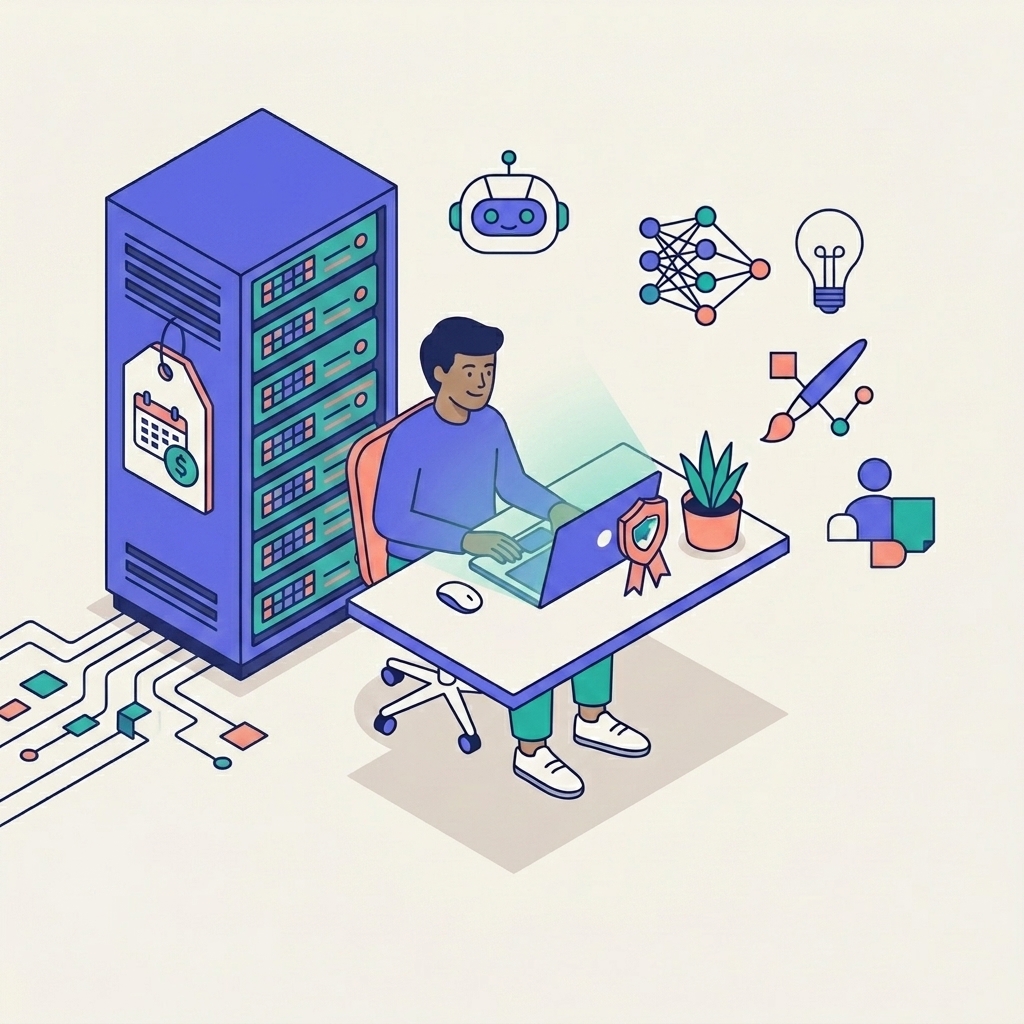
The dominant business model in AI is rental. You don't buy AI—you subscribe to it. Monthly fees, per-token pricing, usage-based billing. The AI lives on their servers, runs on their hardware, and operates under their terms.
This is not accidental. It's a business model that creates recurring revenue, continuous data collection, and structural dependency.
The Rental Model
When you rent AI from a major provider:
- They control access: Pricing changes, rate limits, and feature modifications happen on their schedule
- They control capability: Model updates may change behaviour in ways that affect your workflows
- They collect your data: Every interaction is a data point that informs their product development
- They can revoke access: Terms of service violations, payment issues, or business decisions can cut off your AI access instantly
- They set the terms: Privacy policies, acceptable use policies, and data handling practices are dictated, not negotiated
The Ownership Alternative
Owning your AI infrastructure means running models on hardware you control:
- You control access: No one can revoke your ability to run a local model
- You control capability: Model versions don't change unless you choose to update
- You keep your data: Nothing leaves your machine
- You set the terms: No terms of service, no acceptable use policies, no privacy policies to accept
- You control costs: After hardware investment, running costs are electricity only
The Hybrid Approach
Full AI ownership is not practical for everyone. The pragmatic approach is a hybrid:
Own
- Local models for sensitive work (Ollama + open-source models)
- Knowledge management infrastructure (Obsidian)
- Automation workflows (self-hosted n8n)
Rent
- Frontier model capabilities for non-sensitive tasks (Google AI Studio, Anthropic Claude)
- Specialised services that are cost-prohibitive to replicate locally (cloud compute for large-scale processing)
The key: rent by choice, not by necessity. If you own a viable local alternative, renting cloud AI becomes a conscious decision rather than a structural dependency.
The Long View
AI capability on consumer hardware is improving rapidly. Models that required data centre GPUs two years ago now run on laptops. This trend will continue—and it means the ownership option becomes more viable every year.
Investing in AI ownership now, even modestly (learning Ollama, building local workflows, understanding open-source models), is an investment in future independence.