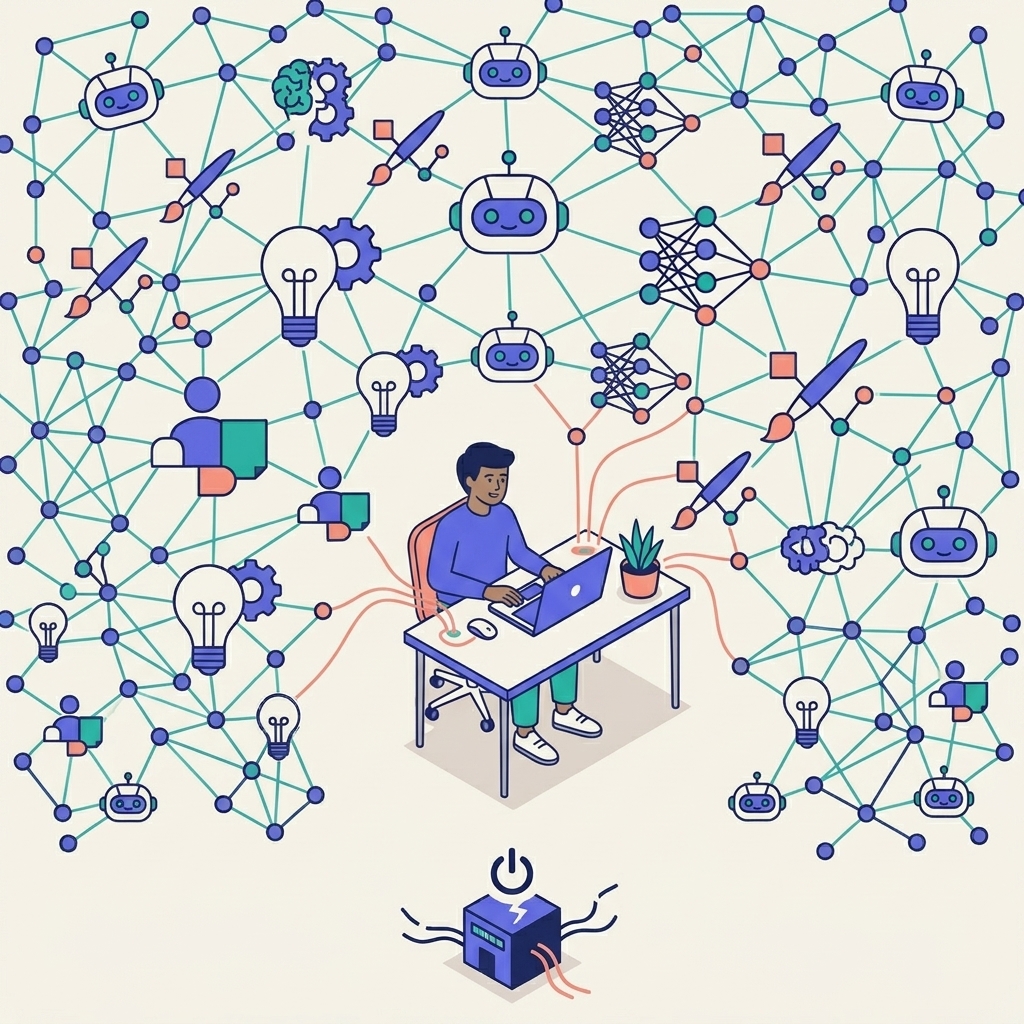
For the past decade, computing power has been centralised. Cloud platforms, SaaS applications, and data centres have pulled intelligence, storage, and processing away from individual users and into corporate infrastructure. AI initially accelerated this trend—you needed massive compute to train and run models.
But the tide is turning.
The Decentralisation Trend
Three developments are shifting AI power back to individuals:
1. Smaller, More Efficient Models
Model efficiency has improved dramatically. Models that required enterprise GPUs now run on consumer laptops. Techniques like quantisation, distillation, and architectural improvements mean that a 2026 laptop can run models that would have required a data centre in 2023.
2. Open Model Availability
Major AI companies (Meta, Mistral, Google) are releasing capable models under open licences. This means anyone can download, run, and modify these models without paying subscription fees or agreeing to restrictive terms.
3. Simplified Local Deployment
Tools like Ollama, LM Studio, and others have made local AI deployment as simple as installing an application. The technical barrier that once required ML engineering expertise has been reduced to running a single command.
What This Means for Remote Workers
Decentralised AI gives individual professionals capabilities that were previously available only to well-funded organisations:
- AI-assisted writing, analysis, and coding without cloud dependencies
- Private AI processing that keeps sensitive data on your hardware
- Offline AI capability for working in locations with poor internet
- Cost-free AI usage after initial hardware investment
- Customisable AI behaviour through fine-tuning and configuration
The Power Dynamic
When AI is centralised, the provider holds the power:
- They set the price
- They define acceptable use
- They collect and potentially monetise your data
- They can modify or discontinue the service
When AI is decentralised, the user holds the power:
- You control the cost (hardware + electricity)
- You define your own use cases
- You keep all your data
- The model is yours permanently
This shift is particularly significant for remote workers and independent professionals, who operate without the institutional bargaining power that large organisations have when negotiating with AI providers.
The Practical Reality
Decentralised AI is not yet a complete replacement for cloud AI services. Frontier capabilities, multi-modal features, and extremely large context windows still require cloud infrastructure. The pragmatic approach is hybrid:
- Local first for routine tasks, sensitive data, and offline work
- Cloud supplement for frontier capabilities and specific use cases
But the trajectory is clear: local AI is getting more capable, more accessible, and more practical every quarter. The remote worker who invests in decentralised AI infrastructure today is building a more resilient, more autonomous professional practice.