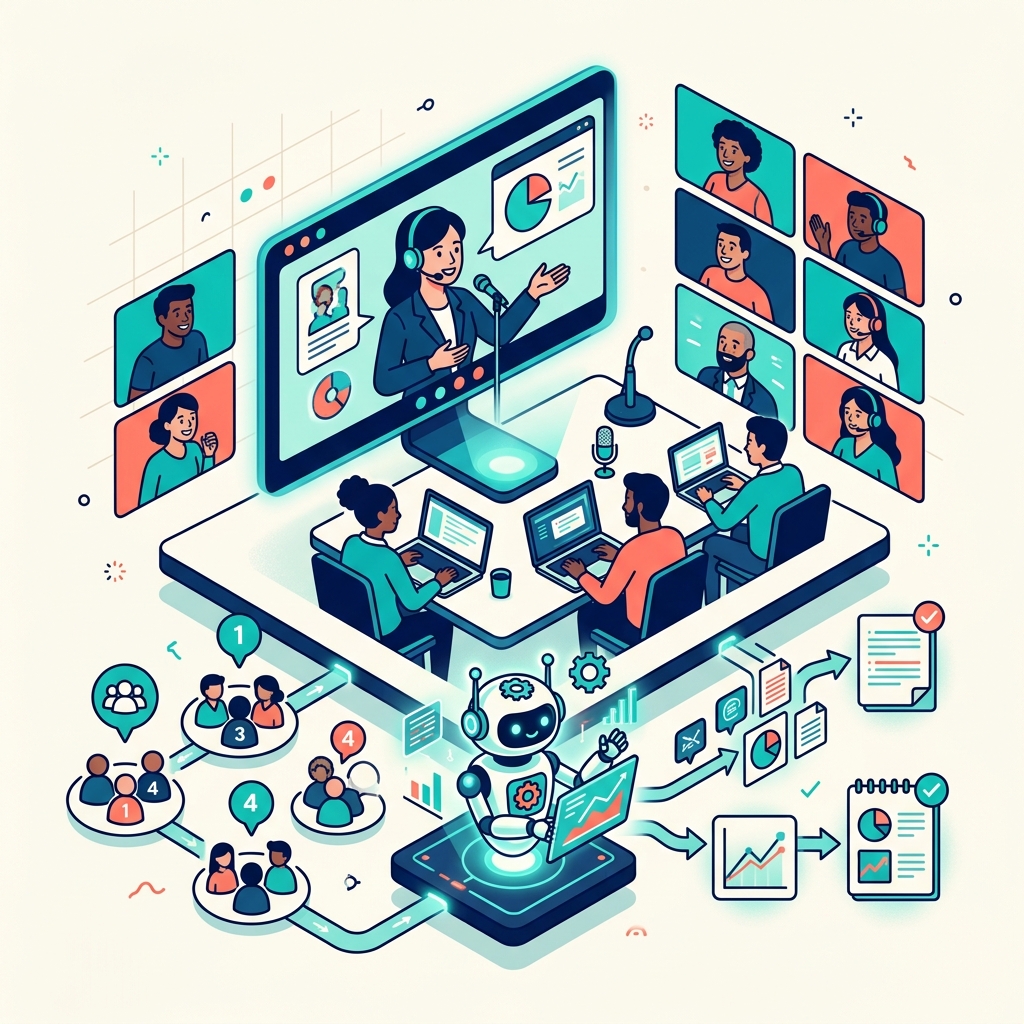
Running a virtual workshop as a solo consultant is a high-wire act. You have to guide the conversation, manage the energy of 10 different stakeholders on a Zoom call, take meticulous notes, and somehow extract a coherent strategy by the end.
When I facilitated in-person sessions for brands like Disney, I had a junior strategist scribbling notes on a whiteboard. Today, running my AI consultancy and managing my charity Become Inspired from cafes across the globe, I don't have a junior strategist. I have an AI.
Here is how I use AI to run flawless, high-value virtual workshops.
Pre-Workshop: The Context Brief
A successful workshop is won in the preparation. I feed all pre-reading materials, past client emails, and industry data into an LLM (like Claude 3.5 Sonnet) and prompt it to generate the agenda.
"Based on these client documents, generate a 2-hour workshop agenda aimed at identifying bottlenecks in their marketing funnel. Include 3 interactive breakout exercises and strict timeboxing."
During the Workshop: The Silent Co-Pilot
When the Zoom call starts, the AI assistant (native to the platform or an integration like Fathom) enters the room.
1. Zero-Friction Note-Taking
I tell the client explicitly: "I am recording and using an AI to transcribe this call so I can give you 100% of my attention." Because I am not looking down at a notepad, I can read body language, interject at the right moments, and drive the strategy.
2. Live Fact-Checking
If a client asks, "What was our Q3 conversion rate again?" I don't break the flow to hunt through a spreadsheet. I can query my local desktop AI agent, which scans my connected Notion workspace and feeds the answer directly to my screen in seconds.
Post-Workshop: The Immediate Deliverable
This is where the magic happens and where you justify your consulting fee.
In the past, the client wouldn't see the workshop notes for three days while the consultant typed them up. Now, the minute the Zoom call ends, the AI processes the full transcript.
I use a custom GPT specifically designed for workshop synthesis. It extracts:
- The Executive Summary: What was agreed upon.
- Action Items: Assigned to specific people with deadlines.
- The 'Aha' Moments: Key strategic insights pulled from the messy brainstorming.
I spend 15 minutes reviewing and formatting this output, and the client receives a comprehensive, structured strategy document while the energy of the workshop is still fresh in their minds. That speed of execution is what turns a one-off workshop into a long-term retainer.
About the Author
Simon Bullows is an AI Consultant and digital nomad who helps remote teams and freelancers integrate AI into their workflows. With a background working on projects for Marvel and Disney, Simon brings enterprise-level creative strategy to the solo economy. He is also the founder of the charity Become Inspired.
Frequently Asked Questions
What is the best AI tool for transcribing client workshops? Tools like Fathom or Otter.ai are excellent, but in 2026, the native AI integrations within Zoom and Microsoft Teams provide the most seamless experience for enterprise clients without requiring external bot invitations.
How does AI help during the actual workshop? Live AI assistants can monitor the conversation, flag when certain agenda items are taking too long, and instantly pull up relevant data or previous meeting notes based on voice commands.