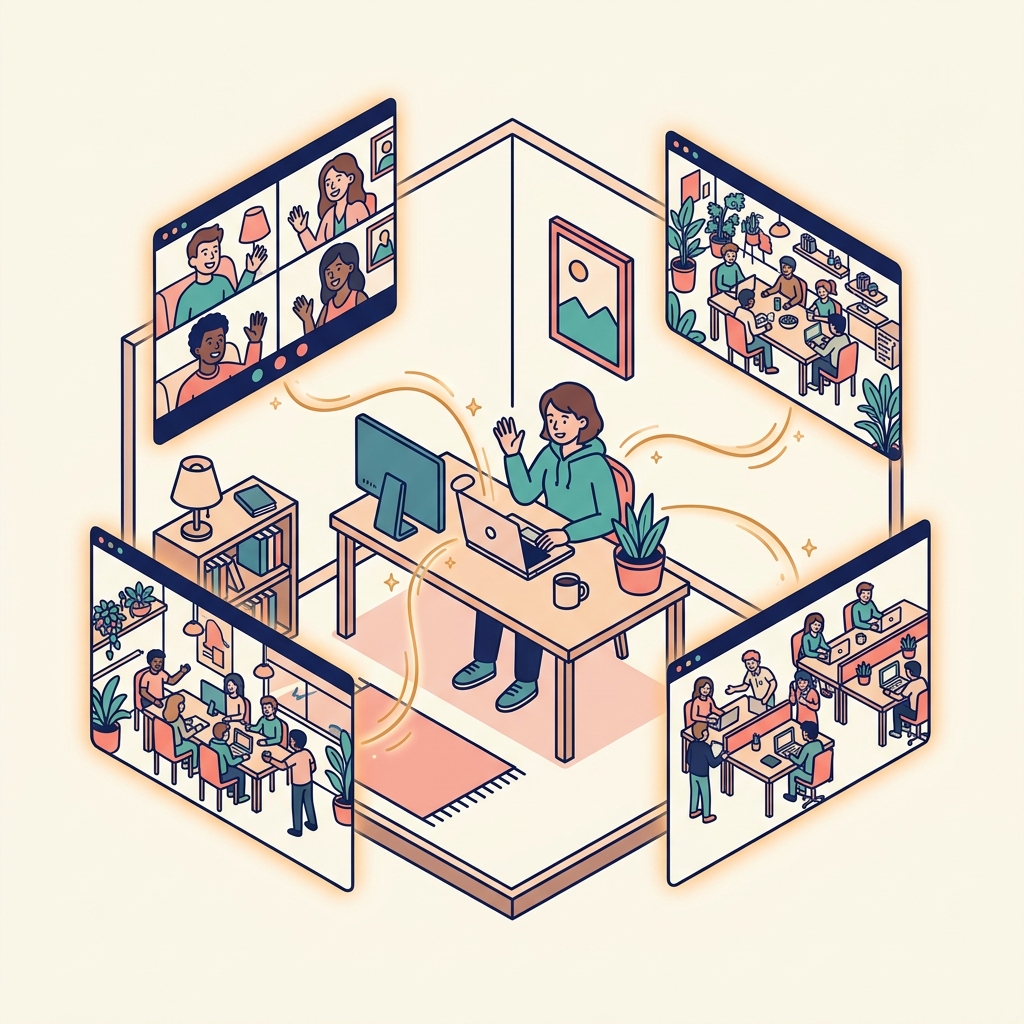
Remote work's dirty secret is that the freedom to work from anywhere often comes with a cost that nobody includes in the "digital nomad starter pack" articles: social isolation.
When your colleagues are AI agents and your office is a laptop, the organic social interactions that office workers take for granted—the kitchen chats, the lunch conversations, the casual "how was your weekend?"—don't happen. And that absence has a real impact on wellbeing and, eventually, on the quality of your work.
Why It Matters Professionally
This isn't just a lifestyle concern. Social isolation affects work quality in measurable ways:
- Reduced creative thinking: Many of the best ideas emerge from casual conversation and exposure to different perspectives. Isolation reduces this input.
- Echo chamber risk: Without regular external input, your thinking becomes more insular. You stop challenging your own assumptions.
- Motivation decay: External accountability and social energy from colleagues is a genuine productivity factor. Without it, discipline has to carry the full load.
- Client relationship quality: If your only human interaction is client calls, those relationships become transactional rather than relational.
The Non-Cliché Solutions
"Join a coworking space" is the standard advice. It's not wrong, but it's insufficient. Here are strategies that actually work:
1. Scheduled Social Rituals
Build social interaction into your calendar with the same priority as client meetings:
- Weekly video call with a peer group or mastermind (3-5 people in similar professional situations)
- Monthly in-person meetup if you're in a location with a professional community
- Regular conversations with friends and family that aren't about work
2. Community Contribution
Participate in communities where you give as much as you take:
- Contribute thoughtfully to online communities in your niche (Slack groups, Discord servers, forums)
- Offer free value (answering questions, sharing resources) without expecting immediate return
- Attend or host local events when your slowmad location has relevant communities
3. The "Third Place"
Sociologists call it the "third place"—a space that isn't home and isn't work where casual social interaction happens naturally. For remote workers, this might be:
- A café where you become a regular (the barista knows your order, you recognise other regulars)
- A gym or fitness class (shared physical activity is a powerful social connector)
- A language class or local interest group in your current city
4. Intentional Co-living
Some slowmad locations offer co-living spaces designed for remote workers. These provide built-in community—shared kitchens, communal events, other professionals in similar situations. They're more expensive than a private apartment but solve the isolation problem by design.
5. Depth Over Breadth
The quality of your social connections matters more than the quantity. Two or three deep friendships provide more social sustenance than a hundred superficial networking contacts. Invest time in maintaining the relationships that actually nourish you.
The Honest Truth
Remote work amplifies whatever your natural social tendencies are. Extroverts will find ways to connect; introverts will enjoy the solitude—until they don't. The problem typically surfaces not immediately but after 6-12 months of location-independent work, when the initial excitement fades and the absence of community becomes noticeable.
Build your social infrastructure proactively, not reactively. It's much harder to climb out of isolation than to prevent it.