When you sign a consulting contract, the Non-Disclosure Agreement (NDA) is absolute. During my time managing assets for Marvel and Disney, a single leak of a script or design file would result in immediate termination and massive legal liability.
Today, the biggest threat to client confidentiality isn't a hacker; it's a careless freelancer pasting a proprietary financial report into a free LLM window to "summarize it quickly."
As an AI Consultant, my clients trust me to build high-leverage workflows without compromising their data integrity. Here is the strict protocol you must follow in 2026 when handling client data with AI.
The Rule of Zero Retention
By default, consumer-tier AI products (like free ChatGPT, standard Claude, or Gemini) use the data you input to train their future models. If you paste a client's secret product roadmap in there, you have breached your NDA.
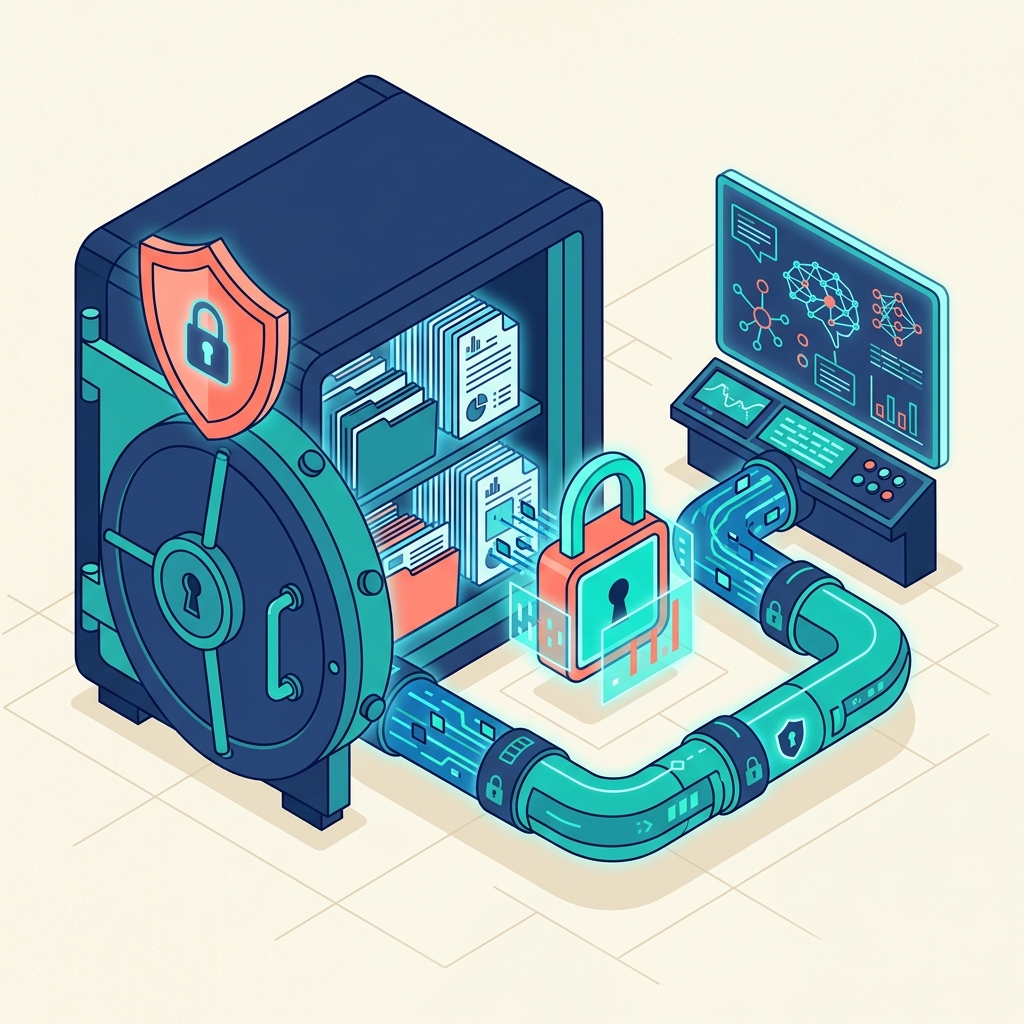
The Solution: You must exclusively use Enterprise tiers or API integrations. When you use OpenAI’s API, Anthropic’s API, or Google Cloud Vertex AI, strict zero-data-retention policies apply. Your prompts and data are processed and immediately discarded; they are never used to train the base model. If you are building tools for clients, you must architect them using these secure endpoints.
The 3-Step Security Protocol for Freelancers
If you are using AI to assist your own daily workflow (e.g., asking an LLM to help you write a proposal for a client), follow these steps:
1. Opt-Out of Training Data
If you must use a web UI (like ChatGPT Plus or Claude Pro), aggressively check your settings. Every major platform now has a toggle to "Disable Chat History & Training." Turn this off before pasting anything related to a client.
2. Aggressive Anonymization
Never trust the toggle completely. Before I feed a client document into an AI tool, I scrub it of PII (Personally Identifiable Information).
- Change "Acme Corp Q3 Revenue: $45M" to "Client_A Q3 Revenue: [Large Sum]".
- Remove all specific employee names, email addresses, and physical locations. Let the AI analyze the structure of the problem, not the specific confidential data.
3. Local LLMs for Maximum Security
For absolute maximum security—such as when I am analyzing sensitive donor data for my charity, Become Inspired—I do not use cloud models at all.
In 2026, local open-source models (like Llama 3 running via LM Studio or Ollama on a MacBook Pro) are incredibly powerful. Because the model runs entirely on your local hardware, you can analyze the most sensitive data in the world with zero risk of it leaving your machine.
Trust as a Business Model
Clients are terrified of AI data leaks. If you can clearly articulate your strict data protection protocols during your initial pitch, you instantly separate yourself from amateur freelancers. Data security isn't just a legal requirement; it is your ultimate competitive advantage.
About the Author
Simon Bullows is an AI Consultant and digital nomad who helps remote teams and freelancers integrate AI into their workflows. With a background working on projects for Marvel and Disney, Simon brings enterprise-level creative strategy to the solo economy. He is also the founder of the charity Become Inspired.
Frequently Asked Questions
Is it safe to paste client code or strategy documents into ChatGPT? Never use the free, consumer-facing tier of any LLM for client data, as it may be used for model training. You must use the Enterprise tier or access the model via API, where zero-retention policies are enforced.
What is data anonymization? It is the process of removing Personally Identifiable Information (PII) such as names, emails, and financial figures from a document before feeding it into an AI tool, replacing them with generic placeholders.