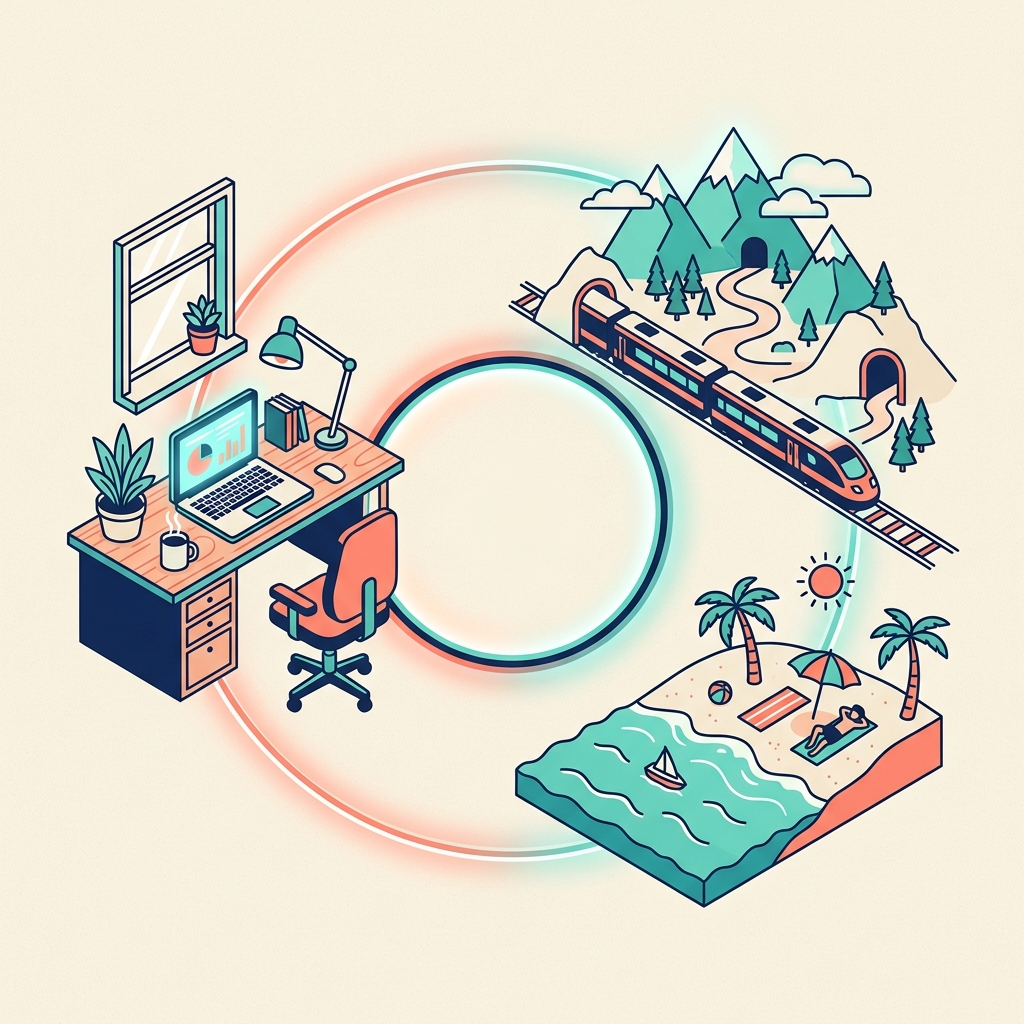
"Digital nomad" has become a loaded term. It conjures images of laptop-on-the-beach Instagram posts, coworking spaces in Bali, and a lifestyle that looks glamorous but is, for many, genuinely exhausting. Constantly moving, constantly networking, constantly documenting—it's a recipe for burnout disguised as freedom.
Slowmadism is the counterpoint. Move slowly. Stay longer. Work deeply. The philosophy prioritises productive stability over novelty-seeking.
What Slowmadism Actually Means
The core principles:
- Stay in each location for 1-3 months minimum. Long enough to establish routines, find your preferred café, learn the neighbourhood, and do focused work. Short enough to maintain the flexibility that drew you to remote work in the first place, but long enough to establish a rhythm that feels as reliable as having a solid base back in Manchester.
- Prioritise infrastructure over aesthetics. A reliable internet connection, a comfortable workspace, and a quiet environment matter more than whether the location looks good on Instagram.
- Limit moves to 4-6 per year. Each move is a productivity disruption—packing, traveling, unpacking, orienting, finding new routines. Minimise the disruptions.
- Choose locations that support your work rhythm, not locations that compete for your attention. A bustling tourist hub is stimulating for a week but distracting for a month.
The Practical Framework
Location Selection Criteria
Rate each potential location on:
- Internet reliability: Check Speedtest results and coworking reviews. Minimum 50 Mbps download for video calls and cloud work.
- Cost of living: Housing, food, transport, coworking. Use Numbeo or similar databases for comparisons.
- Time zone alignment: If you work with clients in specific time zones, your location needs reasonable overlap. Southern Europe works well for UK/US clients.
- Remote work friendliness: Research whether the location has reliable infrastructure for remote professionals—coworking spaces, expat communities, and good connectivity.
- Quality of life: Healthcare access, safety, walkability, social infrastructure.
The Operational Layer
Your AI-powered systems should be location-agnostic:
- Notion CRM and project management works from any internet connection.
- n8n automations run on your VPS regardless of where you are physically.
- Your local AI agent travels with you on your laptop.
- Communication tools (Google Workspace, Slack) are inherently cloud-based.
The goal is to design your work infrastructure so that changing your physical location has zero impact on your operational capacity. When you arrive in a new city, you open your laptop and everything works exactly as it did yesterday, in the previous city.
The Burnout Prevention Layer
The slowmad approach prevents burnout because it preserves the two things fast travel destroys:
- Routine. Creativity and deep work require routine. When your environment changes every week, you never establish the rhythmic work patterns that produce your best output.
- Rest. Constant novelty is stimulating but exhausting. Familiar surroundings allow your brain to operate in "default mode"—the restful state where insight and creative thinking actually happen.
Move slowly. Work deeply. That's the blueprint.