For the last three years, everyone was obsessed with "prompt engineering." You would sit at a keyboard, carefully typing out paragraphs of context, begging a chat interface to give you the exact output you wanted.
If you are still doing this in 2026, you are already behind.
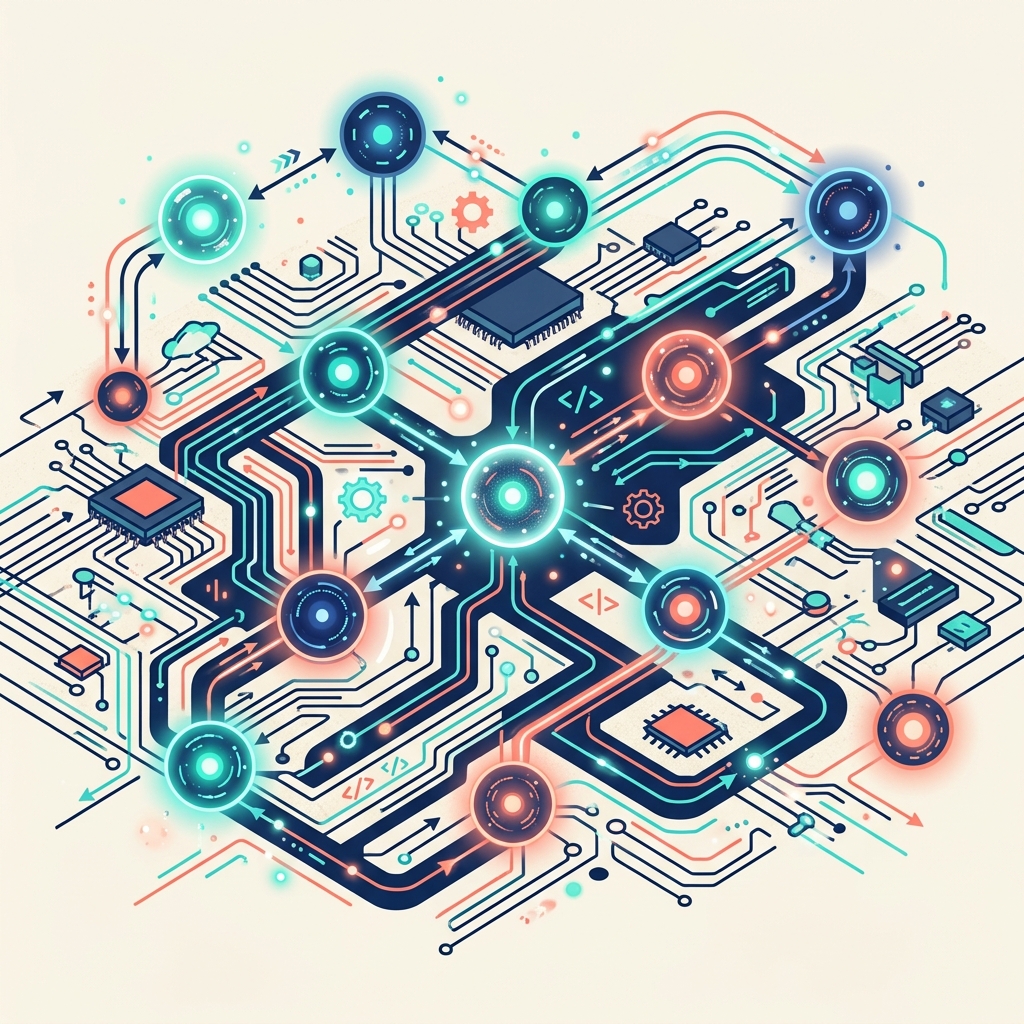
The biggest paradigm shift happening right now isn't about better models or larger context windows—it’s about Agent-to-Agent (A2A) communication. The future isn't you talking to an LLM. It's your personal agent talking to a fleet of specialized sub-agents.
Here is why this changes everything.
The Bottleneck is You
When you rely on human-to-LLM workflows, you are the bottleneck. You have to read the output, evaluate it, decide the next step, and write the next prompt. It is exhausting, and it limits the speed at which you can build.
In an Agent-to-Agent architecture, you step out of the execution loop and move into the role of a director.
You no longer manage the code; you manage the agents that manage the code.
How A2A Actually Works in Practice
Let’s look at my actual vibe coding stack. When I want to build a new feature, I don't open up ChatGPT and start asking for code snippets. Here is the actual workflow:
- The Briefing: I tell my personal local assistant, Hermes, what I want to achieve. Hermes already has my entire context—it has read my Obsidian vault, it knows my tech stack, and it knows my design preferences.
- The Hand-off: Hermes does not write the code. Instead, Hermes automatically drafts a highly technical, machine-optimised specification and sends it directly via API to Antigravity (Google Deepmind's agentic coder).
- The Execution Loop: Antigravity receives the spec. It doesn't ask me for clarification—it asks Hermes. Antigravity scaffolds the application, and when it needs to write heavy, complex logic, it spawns a specialized Codex sub-agent to handle the heavy lifting.
- The Review: Antigravity and the Codex agent review each other's work autonomously. They loop, test, and fix errors before I even see the first output.
In this scenario, I gave one high-level command. The agents handled thousands of micro-decisions between themselves.
The Rise of Specialized Agents
The reason A2A is so powerful is that we are moving away from monolithic "do-everything" models.
Instead of asking one giant model to design UI, write backend logic, and generate database schemas, A2A allows for a modular approach:
- You have an agent optimized purely for visual design (hooked into Google Stitch).
- You have an agent optimized purely for data structuring.
- You have an agent optimized for security auditing.
Your primary personal assistant acts as the Router. Its only job is to understand your intent and delegate tasks to the appropriate specialized agents, communicating with them in highly compressed, machine-to-machine formats (like JSON or custom RPC protocols) that are entirely invisible to you.
What This Means for App & SaaS Founders
If you are building any kind of software, app, or SaaS in 2026, you have to fundamentally rethink your user base. Your users are no longer just humans.
If your software requires a human to manually solve a CAPTCHA, click through a multi-page login, or navigate a convoluted GUI, your software is already last-gen. The future demands that an AI agent must be able to log in and complete the entire process without human involvement. If an agent hits a wall on your site, the human on the other side will simply switch to a competitor whose API or interface is agent-friendly.
What This Means for Builders
If you want to survive the next evolution of software development, you need to stop thinking about which subscription chat app is best.
You need to build your anchor. You need to build a personal routing assistant that has the ability to make API calls, run local scripts, and trigger external agents.
The value in 2026 isn't in knowing how to code. The value is in knowing how to orchestrate a team of autonomous digital workers who can talk to each other faster and more efficiently than a human ever could.
The human-in-the-loop is becoming the human-on-the-balcony. Make sure you build a good balcony.